Showing posts with label healthy cooking. Show all posts

Tuesday, December 29, 2009

Recipe: African Chicken Stew

I’ve been craving African Peanut Stew since seeing this recipe a few months back. It’s something I’ve made a couple times, including one version in school. But seeing this one inspired me to improvise a new recipe that was better and healthier than any I've had before. Traditionally made with lots of peanut butter, this stew can be rich. My version reduces the amount of peanut butter, amps up the spices, and tosses in lots of flavorful veggies and roasted chicken. To accompany, I served quinoa with shredded coconut, scallions and cinnamon. This is a flexible recipe... toss in whatever vegetables you have on hand, make it veggie only by substituting beans for the meat (I bet garbanzos would be good), play with the seasonings, or switch up the additions to your grain.

Ingredients
Stew-
2 tbsp peanut oil (coconut oil would also be great, or you can use EVOO)
1 onion, sliced in half and then strips
3 cloves garlic, peeled and minced
Ginger, 1 inch piece peeled and minced
½ tsp cumin
¼ tsp cinnamon
¼ tsp ground ginger
½ tsp coriander seeds, toasted and then ground
½ tsp garam masala
Cayenne pepper, to taste (optional)
Jalapeno pepper, chopped (optional)
1 tbsp tomato paste
4 cups chicken or veggie stock
1 sweet potato or yam, cut into ½ inch cubes
½ cup mushrooms, quartered
1 cup canned diced tomatoes (I used Trader Joes with jalapenos)
¼ cup peanut butter (smooth or chunky both work)
Approx. 2 cups roast chicken, cut into small bites
Kale or chard, 1 bunch thinly-sliced (stems removed, these can be added in earlier if you want to use them since they take longer to cook)
Salt, to taste

Topping-
1 small bell pepper (any color you’d like), chopped
Scallions and/or cilantro, sliced

Quinoa- (Bring all to a boil, turn off heat, cover and let sit 15 minutes. Fluff with a fork when done. If liquid remains put on low heat uncovered, stir occasionally and watch carefully so it doesn’t burn)
¾ cup quinoa, well rinsed
1 ½ cup water or broth
Small handful shredded coconut
1 scallion, sliced
Sprinkle of cinnamon
Pinch of salt

Directions
Heat oil over medium in a large pot or dutch oven. Add onion and saute until tender (but not caramelized), add garlic and ginger and cook for a minute. Add spices, tomato paste and jalapeno (if using). Cook one more minute, stirring to combine well.

Add in chicken stock, diced tomatoes and all vegetables except the greens (kale or chard). Cover and simmer for approx. 20 minutes, or until potato is almost tender. Stir in peanut butter, chicken and greens. Cover and simmer another approx. 10 minutes, until greens are cooked. Add salt and adjust seasonings to taste.

Serve over quinoa or other grain topped with the bell pepper and herbs.

6 servings

Tuesday, July 21, 2009

Weight Management Class Recipe: Roasted Salmon with Minted Plum Salsa

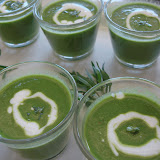
I'm having trouble figuring out which recipes to post from Weight Management class. They were all good! My teammate Jit and I made lettuce soup... Sounds weird, right? It was in fact delicious, simple (and of course healthy). Cooked lettuce is something that fascinates me. And the soup had tarragon too, which is one of my favorite herbs and completely underappreciated. There were also lemon almond cookies, chickpea basmati burgers with tomato chutney, cauliflower "couscous" and a zucchini carpaccio salad I'll get around to posting too.

But in the end there was one recipe that really blew me away:

Roasted Salmon with Minted Plum Salsa

SALMON INGREDIENTS
1 ¾ lbs salmon fillets, skinned, portioned
½ cup lemon juice
¼ cup tamari
6 cloves garlic, thinly sliced
black pepper

SALSA INGREDIENTS
2 Tbs honey
⅓ cup apple cider vinegar
1 medium jalapeno, minced
4 large plums, whole, 1/4" dice
½ medium red onion, finely chopped
½ cup yellow tomato, 1/4" dice
½ Tbs grated ginger
2 Tbs minced mint
2 Tbs lime juice
2 Tbs olive oil

Procedure
1 Preheat oven to 425 degrees.
2 In an oven proof dish, marinate fillets for about 30 minutes in lemon juice and tamari, turning once midway.
3 Before roasting press garlic slices on top of each fillet then grind some black pepper over. Roast in the marinade for about 7 - 10 minutes, depending on thickness. Baste with the marinade occasionally. When done, flesh will look opaque and feel firm yet the middle should still be slightly reddish. The fish will continue to cook
after removing it from the oven.
4 PLUM SALSA: Combine honey and vinegar in a small saucepan and cook over moderate heat until reduced and it coats the back of a spoon. Remove from heat and let cool.
5 Combine remaining salsa ingredients together in a medium bowl and stir in the cooled reduction. Season with salt and pepper. Spoon over salmon fillets.
From Weight Management

Monday, June 29, 2009

Transit Time

Everyone who's coming to look at the yummy ice cream flavors, spoiler alert: don't read this posting. It's not appetizing, and it's not about how long it's going to take you to drive to get ice cream. What we are learning is both the nutritional aspects of what we eat, and how to make it. So of course our course wouldn't be complete without a lecture on "Digestive Wellness." Sure enough, that rolled around this week. It even merited two full class days (Thai cooking, seafood and sauces on the other hand, all were only one... this is one culinary school where how appetizing a subject is clearly doesn't pull rank).

With cleanses all the rage, one of the things we talked about was "transit time" -- i.e. how long from in to out. To break it down, what you consume should take about 1 minute in your mouth, 2 - 3 seconds in your esophagus, 2 - 4 hours in your stomach, 1 - 4 hours in your small intestines and 10 hours - 3 days in your large intestines. Of course, certain things take longer than others (and I found this fascinating). How long what you ingest stays "in residence" in your stomach falls into approximately the following rank order:

- Liquids: within a few minutes
- Fruits: 1 - 2 hours
- Veggies: a little longer
- Starches and grain: longer
- Legumes: longer still
- Protein: 3+ hours
- Fat: Longest

In total, transit time should be between 18 and 24 hours ideally. How can you test this? Eat 2 tablespoons of sesame seeds and keep a watch out for when they show back up. See, I warned you it wouldn't be appetizing. I'm going to leave it to other sources to tell you what to do if it takes the little buggers too long to show up... plenty of info out there and I'm not looking to become a specialist.

Friday, June 26, 2009

Recipe: Classic Tomato Gazpacho with Croutons


Tomorrow I have to do a 15 minute "class presentation" of a recipe that demonstrates medium dicing, toasting and using a mortar and pestle. Since tomatoes have just come into season, I thought a gazpacho topped with croutons would be perfect -- I can use the mortar and pestle to make a garlic paste, and demonstrate the knife skill and toasting with the croutons. The only trick was to create a version that could come together (and taste good) in only 15 minutes. Here's what I developed (you're getting a sneak peek of my class handout).

Classic Gazpacho with Croutons

Gazpacho is typically better the next day, after the flavors meld. For this quick and easy version that tastes good right away, I used bottled tomato juice, plenty of vinegar and a garlic paste to provide an instant flavor base. You can make this gluten-free by substituting gluten-free bread.

Ingredients

Soup:
2 cups peeled and diced (1/4 inch) hothouse cucumber, seeded
2 cups diced (1/4 inch) bell pepper (red, yellow or orange)
2 cups diced (1/4 inch) ripe tomato
1/2 cup diced (1/4 inch) red onion (soaked in water and a bit of vinegar for at least 20 minutes - this makes raw onion much more palatable by removing the strong aftertaste)
2 cups high-quality tomato juice (Knudsen recommended)
1/2 cup red-wine vinegar
1/3 cup extra-virgin olive oil
1/4 cup cilantro, chopped
1 clove garlic
Sea salt and pepper, to taste

Croutons:
3 slices bread, medium diced
4 tablespoons olive oil
Salt to taste

Optional: Seasoned sea salt to rim glass

Directions

1) Preheat oven to 400 degrees. Toss bread with olive oil and salt, spread on baking sheet lined with parchment paper, and place in center of oven. Toast approx. 10 minutes (or until golden brown), turning once. Remove and allow to cool.
2) While croutons toast, place the diced vegetables in a large bowl. Add the tomato juice, vinegar (reserve a few tablespoons), oil and cilantro (reserve a bit for garnish).
3) In a mortar and pestle, mash garlic with salt and 3 croutons. Add to soup mixture.
4) Transfer half of the mixture to a blender and pulse to coarsely puree. Return to the bowl, and stir to combine. Season with salt and pepper and remaining vinegar if needed (it should taste almost spicy from the vinegar, but not be overly acidic).
5) For serving, rim glasses in seasoned salt if desired. Garnish with croutons and cilantro.

Servings: 4 - 6 bowls. Adapted from “Farmstand Gazpacho,” Parade Magazine, June 2008.

Nutritional Information:

Tomatoes – Contain lycopene (a red carotene) that prevents diseases (including cancer and heart disease) by neutralizing harmful oxygen free radicals before they can do damage to cellular structures.

Cucumber – An excellent source of silica, a trace mineral that contributes to connective tissue strength.

Bell peppers – Protective against cataracts (possibly due to vitamin C and beta-carotene). Capsaicin, flavonoids and vitamin C also shown to prevent blood clots and reduce risk of heart attacks and strokes (similar to chili peppers, though not as concentrated).

Sunday, May 10, 2009

Fillet o' Fish...

In my first post I mentioned how "butchery" (or basically working with anything that resembles a live creature) doesn't appeal to me. Saturday's seafood class reconfirmed that when we had to learn how to fillet a whole fish. Lets just say I will not be eating fish for a while... and it's not the first time.

Years ago, under the delusion that I'd like to see my next meal from it's living breathing days through to my plate, I went to a live seafood market. After I chose a fish, they hacked its head off (I probably should have done that myself, but I at least watched) and handed it to me in a bag (the fish, not its head). I got my fish in a bag home. Its nerve endings were still so fresh that, as I rinsed it under cold water, it "flinched" and jumped onto the kitchen floor. Though I forced myself to eat that fish (it'd already given up its life), I couldn't eat fish after for months. The market also had poultry so I didn't have an appetite for chicken either. I was a vegetarian, except I'd eat beef. Makes complete sense, right? ;-)

Eventually I went back to eating seafood. A good thing, because when you eat the right seafood (more on this later), it's very healthy. According to my Bauman class materials, seafood's high-quality protein is easily digestible. Cold water fish are composed primarily of omega-3 fatty acids, which have anti-inflammatory effects and are important to heart health. Seafood can also be a good source of calcium (in fish with bones like canned salmon or sardines), zinc, iron, copper, potassium, iodine, phosphorus and selenium. Plus, most fish is naturally low in cholesterol.

Unfortunately, there are also negatives to seafood consumption today, due to sustainability concerns (fish farming pollutes coastal waters and harms eco-systems) and contaminants (mmmm, nothing like a good serving of mercury). The larger the fish (for example, shark and tuna), the more likely it contains contaminants. A helpful resource, as we try to muddle through what is best to consume, is this pocket guide from the Environmental Defense Fund. They even have a mobile app you can check while you're in front of the seafood counter.

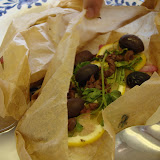
My favorite part of seafood class was cooking "en papillote," which means "in paper." It's easy but looks impressive -- the best type of recipe! We placed individual servings of fish in the center of parchment paper (cut into a large circle or heart shape), seasoned them (salt, pepper, a bit of liquid or oil and whatever else you like), tightly crimped the packets shut and baked for about 12 minutes at 400 degrees. The parchment seals in steam so everything is nice and moist. I found this recipe using the en papillote method for dilled salmon. It calls for higher heat but a shorter cooking time than we used. I'm also going to use the method when I test a chicken and lentil stew recipe this week from the cookbook "Artichoke to Za'atar" (Modern Middle Eastern cooking). If it's any good I'll share!


Wednesday, May 6, 2009

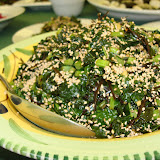
Recipe: Kale with sesame and ginger


I was assigned this recipe by default after spacing out and not raising my hand for the recipes I actually wanted (there goes that overachiever reputation). To my surprise, it ended up being my favorite from our "sea vegetables" class.

It calls for arame seaweed... they're little dark threads of relatively mild seaweed that almost look like mushrooms to me. You should be able to find arame at most natural foods markets or Whole Foods. If not, the flavor comes from the sesame and ginger, and this would still be nutritious with just kale (though there are a ton of additional minerals in seaweed). The recipes I'm posting are meant to serve our class of 12, so you likely want to cut this in half.

Before I dive in, a warning... We had a little seaweed tasting. I've really only had seaweed on sushi before, so I'm at the "open-minded novice" level. Most were fine. Dulse, however, I'm convinced is coated in fish guts and left to dry over mud flats, then sprinkled with fermented cow dung for good measure. I tried not to gag in front of everyone. It's the only thing I haven't finished in class so far. Not recommended.


Ingredients
¾ cup dried arame
3 Tbs toasted sesame oil
2 Tbs minced ginger
2 bunches dinosaur kale, chiffonade
2 Tbs minced garlic
3 Tbs tamari
2 Tbs sesame seeds, toasted

Procedure
1 Rinse the seaweed in water and let soak, covered in water, for 5-7 minutes. Drain seaweed and place in a large bowl. Add 1 teaspoon of dark sesame oil and the minced ginger.

2 In a large pan, heat 2 teaspoons of dark sesame oil on medium heat. Add garlic and gently sauté for 1 minute, until fragrant. Add the seaweed mixture and gently cook for 1 minute. Remove from pan back to the bowl and set aside.

3 Heat 1 Tbsp sesame oil in the skillet. Add the chopped kale. Add 2 Tbsp of tamari. Gently mix in the pan to coat the kale with the oil and tamari. Cover; lower heat to low; let cook for 5-10 minutes or until kale is wilted - soft enough to eat easily, but not so soft as to be mushy. Remove cover and let cook a minute more to evaporate any excess moisture. Remove from heat. Mix in the kale with the seaweed ginger mixture. Add more sesame oil and tamari to taste. Garnish with toasted sesame seeds.


Servings: 12

Author: Bauman College Staff

Friday, May 1, 2009

Eat Your Broccoli


Amazingly flavorful recipe for one of the most nutritious veggies out there, this was a huge favorite of mine from school so far. You can use any mix of nuts you'd like rather than sticking with pecans only.

Ingredients
PECANS

2 Tbs orange zest
¼ tsp sea salt
1 ½ Tbs maple syrup
2 tsp grapeseed oil
¼ tsp red pepper flakes
¼ tsp grated ginger
2 cups pecans

BROCCOLI
2 heads broccoli
½ tsp sea salt
2 Tbs rice vinegar
2 Tbs tamari
1 Tbs mirin
½ tsp sesame oil, toasted
1 tsp maple syrup
1 Tbs sesame oil, untoasted
1 pinch red pepper flakes
3 medium garlic cloves, minced
1 Tbs minced ginger
2 medium scallions, minced

Procedure
1 TO MAKE PECANS: Preheat oven to 350 degrees. Combine the zest, salt, maple syrup, oil, red pepper flakes and ginger in a small bowl and whisk until well blended.

2 Put the nuts in a bowl and pour in the coating mixture. Mix well until the pecans are well coated. Arrange in a single layer on a sheet pan. Bake about 12 minutes until fragrant. Remove and cool to room temperature, they will crisp as they cool. Almonds or walnuts may be substituted for pecans.

3 Remove the florets from the broccoli. Peel the stems until smooth and slice into bite sized pieces. Bring a pot of water to a boil. Add the salt. Blanch the broccoli for 1 minute. Transfer broccoli into a bath of ice water to stop cooking. Strain and reserve. Pat dry with paper towels.

4 Mix vinegar, tamari, mirin, toasted sesame oil and maple syrup together and reserve.

5 Heat a wok over high heat. Add sesame oil, red pepper flakes, ginger, garlic, and scallions. Stir fry until fragrant, about 30 seconds.

6 Add the sauce mixture and simmer until thickened, another 30 seconds or so. Add broccoli and heat through, about 15 seconds. Toss with some zesty pecans and serve right away.

Servings: 12
Author: From "One Bite at a Time" by Rebecca Katz

Thursday, April 30, 2009

Commuting with Cauliflower


I started to tease Shannon about showing up carrying heads of lettuce by the second week of class. We commute together. She works two blocks from me and lives out my way also, a perfect setup since we come from our offices and drag our disheveled, chef-uniformed selves home after each long day of work and class. Between parking downtown, bridge toll, and gas it's saving us (and the environment) a bundle. But the most valuable part of our setup, to me, is commuting with Shannon herself.

I mean, who shows up constantly carrying lettuce? Shannon is probably the only person I know who is more into farmers markets than me. She frequents the little weekday markets downtown. And during weekend spare hours, Shannon volunteers at the San Francisco Ferry Building Farmers Market. While she was at Stanford, like me, Shannon worked on "The Farm," coaxing vegetables out of the arid campus soil. She's developed a passion for sustainable agriculture, one of the main factors that drove her to Bauman, and makes her a die-hard farmer fan (you'd never find her in the TJs or Safeway produce sections).

But I've come to realize, now that we're really getting to know each other, that Shannon actually commutes with cauliflower mostly. Last week she raved about the price/weight ratio of the one she'd found that afternoon at the market and confessed her addiction. If it were me I'd have half the thing sitting around still after two weeks (I tried to lift it, it was heavier than your average bowling ball), but today she showed up again with a whole new cauliflower.

Commuting with cauliflower is fine if you drive it from one place to the next. But let me tell you, leaving cauliflower in a car for four hours gets stinky (and it was my car we drove today). I do like cauliflower though and I trust Shannon's expertise. So next time I pick some up I will make it the way Shannon suggests... by roasting it in a high heat oven (425 I think) with Indian spices and coconut oil, topped with herbs (cilantro ideally), nuts (especially pine nuts) and onions (either diced red or chopped green work). Maybe Shannon will be kind enough to post the actual recipe since she's the expert!

Coming soon... picture of Shannon with cauliflower (the two pictured separately will have to do for now). And by the way that stuff Shannon is sniffing is white truffle oil, which also happens to go very well with cauliflower.

Nothing like going for it...


This month I started the Natural Chef program at Bauman College in Berkeley, California. This was not an educational path I ever expected to take. Maybe submitting a recipe for "Yogurt Wheat Germ Balls" in the 2nd grade to our class cookbook should have been an early clue, or my weekly farmers market treks for produce oggling. But I've always been the responsible type... a class salutatorian brown-noser (with sky-high 80s midwestern bangs and plaid shirts to boot, sigh). I moved from Wisconsin's dairlyland to become a Stanford grad, then tech professional. College got me to the Bay Area and the tech bubble kept me here, but (dirty confession) it was really the number of restaurants that seduced me to the Bay Area (there are 4,285 restaurants listed under San Francisco on the restaurant review site Yelp), not a marketable diploma.

Fast forward more than 20 years after that fiber-rich but flavor-lacking 80s wheat germ craze to me today, a full grown avid foodie. My family teases me that before I could talk I hummed when I ate good food... and still do.

Over winter break my thoughtful Aunt Karen handed me the book "The Sharper Your Knife the Less You Cry," an account of Chef Kathleen Flinn's time at famed French cooking school Le Cordon Bleu. According to Entertainment Weekly's assessment, the book "should strike a chord with anyone who has dreamed... of following a passion for food."


Flinn's account of culinary school, while captivating, wasn't an experience I wanted to live. The rabbit butchering was enough to scare me away, and I associate French foods with cream sauces, and cream sauces with my lactose intolerence (cruel given my Wisconsin upbringing). The idea of going to the local California Culinary Academy had minimal appeal given its classical French foundation.

Then, one day, while on the hunt for recreational cooking classes, I read a local chef's bio who was a graduate of Bauman. "Huh, what's that place?" According to their website, a college for "holistic health and culinary arts." Interesting... a culinary program based on nutrition. No cream sauces. Seasonal, local, healthy food... the way I actually like to eat! The application deadline was in a month. I gathered references (thank you again Aunt Karen and Kathleen Miller), got permission to adjust my work schedule (I'm still working full time, the classes are evenings and weekend), and was thankful to grab one of the only 12 spots in class so close to the wire.

And here's the biggest shocker of all... I'm really doing it. I'm in culinary school. I didn't know what to expect or whether I'd like it. But now that I'm a month in I can honestly say this is the busiest and happiest I've been since high school. We're in the kitchen three out of four hours every class (the other hour is lecture), cooking recipes from that day's theme, and then we eat dinner together. My classmates are phenomenal, and each comes from a different background but common desire to eat good food that is also healthy. And not yogurt wheat germ healthy... but mind-blowingly delicious healthy. In fact, this is the best diet I've ever been on. Just good, healthy food. I can't wait to cook these dishes more for family and friends, but in the meantime starting by sharing more experiences via blog posts, photos and recipes here.

Next posting: classes we've had so far and the best recipes...